
Key takeaways
- 1OT integration brings room systems, video and information into one control point.
- 2It reduces movement in the sterile field and gives the team a shared view of the procedure.
- 3Integration works best when it is planned with the theatre, not added afterwards.
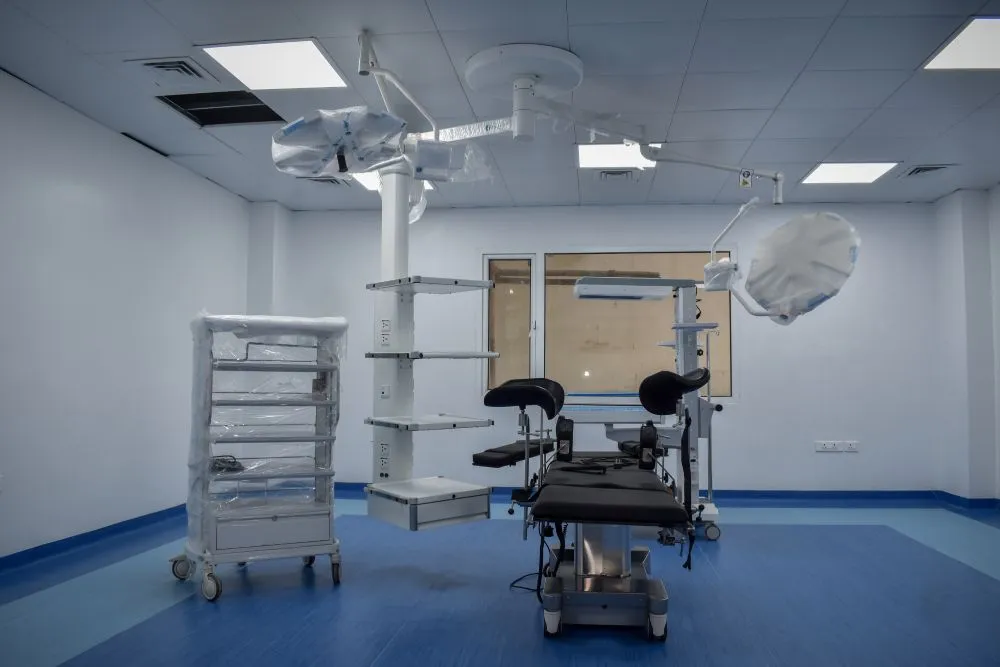
A modern operation theatre contains a lot of separate systems: surgical lights, ceiling pendants, medical gas alarms, HVAC controls, cameras, displays, recording equipment and communication. Without integration, each has its own switches and screens scattered around the room. An Operation Theatre Integration System (OTIS) brings them together.
What OTIS connects
- Room systems. Surgical lights, room lighting, and status of temperature, humidity and room pressure.
- Medical gases. Pipeline pressure status and alarms visible to the team.
- Video. Endoscopic, microscope and in-light camera feeds routed to any display in the room.
- Recording and documentation. Procedures captured for records, teaching and review.
- Communication. Video links to other theatres, departments or lecture halls for consultation and training.
How it changes the way teams work
Less movement in the sterile field
When lighting, video routing and room controls are available from a touch panel within reach, staff don't need to walk across the theatre to adjust equipment.
A shared view of the procedure
The whole team — surgeon, assistant, anaesthetist and nursing staff — can see the same images on displays positioned for each role, improving coordination.
Faster turnaround
Saved room presets for different procedures help staff prepare the theatre quickly between cases.
Planning for integration
OT integration needs cable routes, display mounts, pendant arms and control panels designed into the theatre from the start. In a modular OT, these are built into the wall and ceiling panels, keeping surfaces seamless and cleanable. Added later, integration usually means surface-mounted trunking and compromises on where screens and controls can go.
Planning a project like this?
Talk to our team about your facility's requirements.